What Most Remote Companies Don’t Tell You About Remote Work
One remote founder's struggle with isolation, depression, and anxiety. And what remote companies can do to address the mental health challenges of a remote workforce.
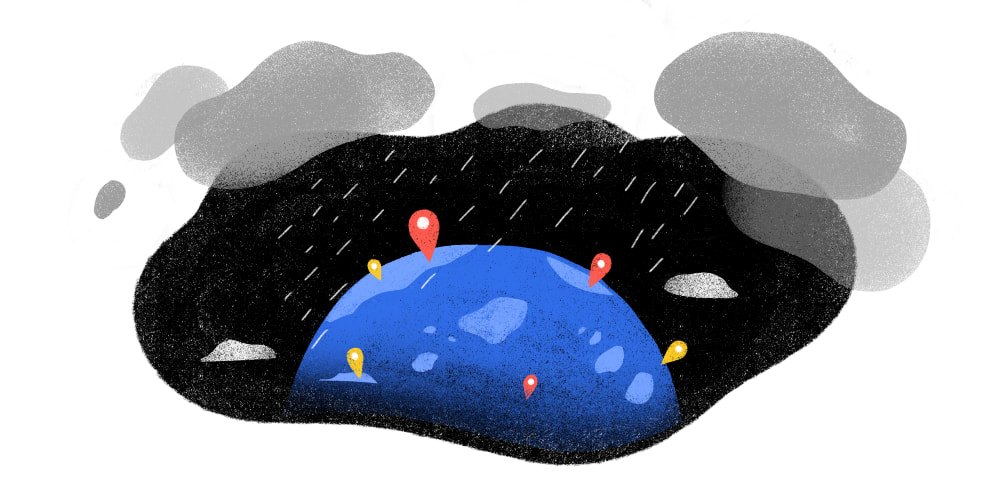
Articles about the remote work lifestyle often focus on drinking piña coladas on the beach, traveling the world, and otherwise enjoying a life that inspires envy in your social media following. This is not one of those articles.
To be everywhere is to be nowhere
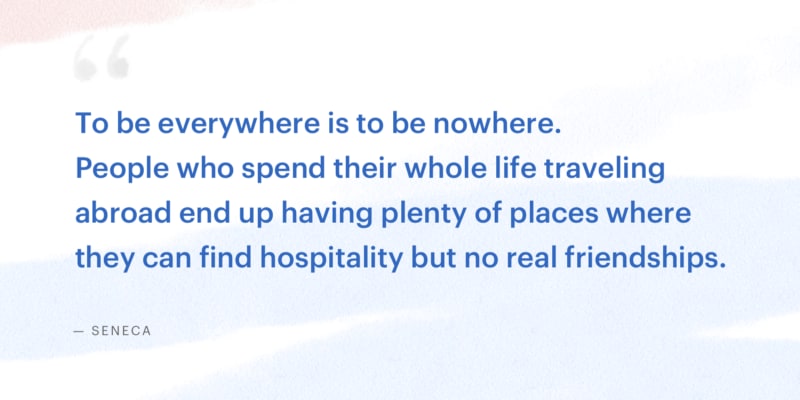
When I was 23 years old, I broke up with my girlfriend, sold or gave away most of my stuff, packed a single suitcase, and booked a one-way ticket from Denmark to Taiwan. I was living a traveler’s dream with no strings attached. At the time, I had no idea that this would be the start of the unhappiest period of my life.
For the record, ending a long-term relationship and moving away from family, friends, and any other meaningful human connections you might have in the world is a terrible idea. Couple that with a nonexistent work-life balance, and you have an excellent recipe for misery.
Loneliness isn’t something that many traveling remote workers write about. You won’t see it in their Instagram stories, but I guarantee you they’ve felt it. When you travel for extended periods of time, you lose your social circle, your sense of belonging, and the everyday routines that keep you grounded and healthy.
You also quickly discover that meeting new people is easy. But making new friends is hard, especially if you’re starting from zero.
It’s OK to prioritize friendships, community, and your mental health over traveling.
I lived in Taiwan for about a year before I returned to Europe. I learned some hard lessons as I went through a series of depression, anxiety, insomnia, and loneliness. It took me a few years to fully recover from that experience.
There are people out there who love the travel-and-work lifestyle. But for many, it’s nothing like social media would lead you to believe. As humans, we need real friends, loved ones, and a place where we belong.
Extensive research shows that people with strong social ties live longer, healthier, happier lives. No matter what Airbnb might tell you, you can’t belong anywhere instantly. Community takes time to build, and there are no shortcuts.
Todoist is a remote-first company. That means people can work from anywhere in the world as long as they have an internet connection. Yet 95%+ of Todoisters aren’t nomads. Most people choose to put down roots in smaller cities surrounded by their friends and family. The beauty of remote work lies in the ability to optimize your location for your well-being.
Remote workers shouldn’t feel like they have to travel to lead interesting, fulfilled lives. It’s ok to prioritize friendships, community, and your mental health over traveling. It may not look as glamorous on Instagram, but you may end up a lot happier for it.
The trappings of working from home
The obvious alternative to traveling the world while working is working from home. But that can be equally isolating in its own way.
I’ve never worked from a real office or even had a traditional job. I co-founded my first company remotely, and I’ve always had a hard time separating life and work. Initially at university, I worked from my dorm room.
Living with 15 other students meant that social interaction was just a door knock away. Balance was built right in. I would do my university work or make progress on side projects. And when I stepped out of my dorm room, I would play Sensible Soccer on an old Amiga or drink a beer with a dorm mate or join in on whatever people happened to be doing.
At some point, I started earning enough money to afford my own apartment. As an introverted programmer who values silence and focus, I thought living alone would be a better setup for me. It didn’t take long for me to discover how wrong I was.
Living by yourself is hard, especially when you’re young. Most days I spent just working. Even though I knew I should create boundaries for my work, I just couldn’t seem to do it. There was always more stuff to get done. As a result, I started a terrible habit of not making an effort to go out and see friends.
When you work from home, it’s easy to fall into bad habits and spiral downward.
Over a period of months, the constant work and social isolation slowly got to me. I started having bad days, feeling down and anxious more and more, until the bad days outnumbered the good ones. Some days I would go to bed at 3 a.m., and others I would sleep until 2 p.m.
My productivity suffered, which only made me feel more anxious and depressed. My mood was completely unstable. I tried to create routines and boundaries between life and work at home. I got up at the same time, stopped work at a specific time, and took more breaks throughout the day. But none of my solutions lasted for very long.
It got to the point where I realized I had to make drastic changes for the sake of my mental health, so I rented an office close to the university. Yes, I was still just working by myself in a different place. And yes, it cost more than just working from home and added a commute into my day.
But it was worth every penny and minute. I needed that physical separation between work and the rest of my life. Work had a definite start and end time. Getting out of my apartment made me more social again as I would do lunches, dinners, or sports with friends while I was already out.
Slowly the good days started coming back. I began showing up to work with energy again. Stressors became easier to handle.
Knowing the things that make you happy, healthy, and productive is very different from doing them consistently. When you work from home, it’s easy to fall into bad habits and spiral downward.
There’s no concrete start and end time to structure your day around. There are no coworkers to get you out of your own head. It’s hard to know when you’ve accomplished enough to feel satisfied. It’s tempting to tack on extra hours today that you’ll pay for in fatigue and burnout tomorrow.
Why remote companies need to openly acknowledge the mental health challenges of remote work

"For ten years I fought depression despite living the life I always wanted traveling the world. It wasn't until I returned to Denmark and settled down that I realized crafting things with my hands was key to my personal happiness outside work" - @Zjellstrom , @Doist 's COO

My story isn’t unique among remote workers. The flexibility to work where you want when you want should support work-life balance, but often it does the exact opposite. In contrast to a traditional office, remote work puts much more focus on output (what you got done) rather than input (how many hours you spent doing it).
There’s a sense of personal responsibility to get enough done that can lead people to keep themselves working long past the point of optimal productivity. Couple that with a lack of physical work boundaries, and remote workers can quickly fall into a downward spiral that’s hard to see the way out of.
Most of us at Todoist work from home and find ways to strike a healthy balance. Doing both is possible. My point isn’t that every remote worker needs to stop traveling and go out and rent an office space.
It’s that the flexibility of remote work requires a lot of self-awareness to recognize an unhealthy cycle and take steps to stop it before it spirals downward. You need to intentionally ask what situation best suits your needs and personality and actively experiment until you find a good fit.
It might be a home office, a coffee shop, a coworking space, none of the above or some combination. It doesn’t matter. The danger lies in doing what I did: ignoring your mental well-being and defaulting to an unhealthy situation with zero work boundaries or social interaction.
In 2016, I was on the Reboot Podcast talking about Embracing Both Sides of Yourself. It explores the ambitious side that’s never satisfied with the way that things are and the human side that wants to be content and happy. After the interview, I decided to join one of their CEO Bootcamp leadership retreats.
The experience opened my eyes to the internal struggles that even very successful people face. I discovered that I have my own issues that I need to resolve to be a better leader, husband, father, friend, and person.
You don’t have to be clinically depressed or anxious to struggle with depression and anxiety. Everyone has issues. But can we talk openly about them? Can we get the help and support we need to address them? In too many cases, the answer to both of those questions is no.
When you don’t see your coworkers in person every day, it’s easy to assume that everything is OK when it’s not.
We talk about remote work as the solution to many problems the world faces. But the research suggests that human beings weren’t meant to work in isolation. One Gallup study found that having a best friend at work is particularly important for employee engagement and job success among remote workers. Those who said they had friends at work felt more productive, stayed at their jobs longer, and reported higher job satisfaction.
Yet Gallup’s data also shows that 25% of fully remote employees feel lonely on a daily basis, compared to 16% of people who work on-site. The flexibility of remote work is real, but so is the isolation.
Remote work poses unique mental health challenges. And when you don’t see your coworkers in person every day, it’s easy to assume that everything is OK when it’s not. As a remote company, we need to honestly acknowledge the downsides of remote work and do more to help our people thrive in all areas of their lives.
We’re still working to figure out how remote work affects our mental health and what we can do to improve the situation. At a high level, here are some of the things our team is actively doing:
- Openly acknowledging that there can be serious mental health issues related to remote work. People aren’t alone in these struggles, and there’s nothing wrong with feeling anxious or depressed.
- Creating an environment that encourages open conversations about these hard topics and not making them taboo. We encourage this in one-on-ones and in public threads. We even had a workshop at our last retreat devoted to the topic of anxiety and remote work.
- If a person is having problems with depression, anxiety, or stress, then we should be there 100% for them as co-workers, as leaders, and as a company.
On a more concrete level, here are some of the things we do to encourage wellbeing:
- 40 days paid vacation per year, as true disconnection is fundamental to help people de-stress and recharge.
- 12 dedicated Health Days per year (separate from PTO) for physical and mental health, so no one has to dip into their vacation time when they're unwell.
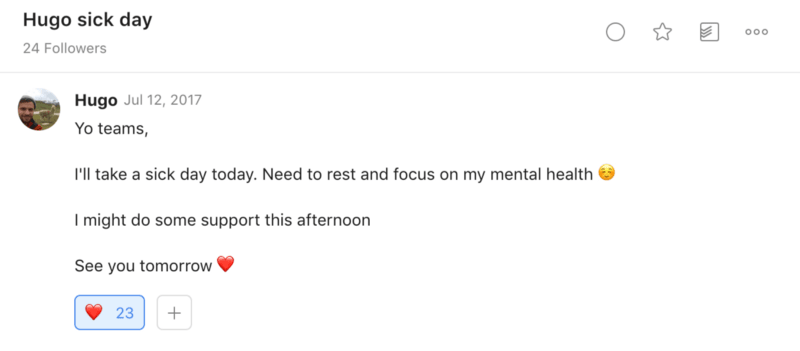
- A Work & Wellness budget that covers coworking spaces, gym memberships, therapy, and more, so Todoisters can work and take care of themselves in whatever way suits them.
- Smaller things like a monthly stress check-in, giving Todoisters a regular space to reflect on and share how they're doing.
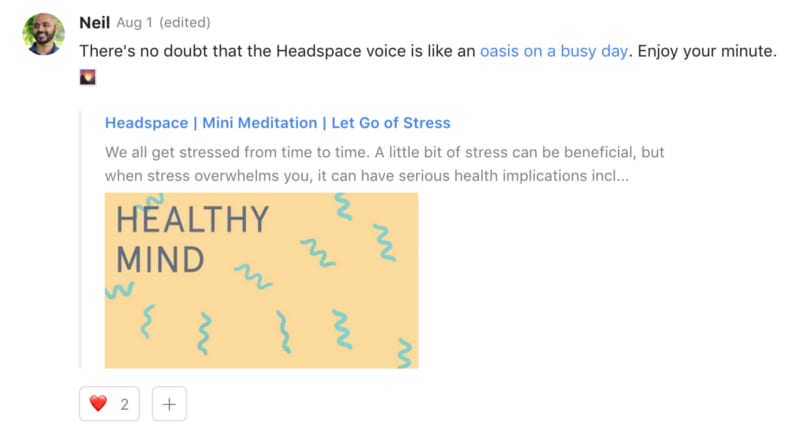
- Lucile and Andrew have recently spearheaded a Mental Health Monthly initiative where they post on a new mental health topic.
I believe companies should want happy employees because helping people live satisfying and meaningful lives is a worthy goal in and of itself. But research has shown again and again that happy employees also make for strong businesses.
Finding work-life balance isn’t about prioritizing your mental well-being at the expense of your work. It’s acknowledging that in the long-term, all areas of your life are better off when you put your mental health first. At Todoist, we’re committed to building a culture that helps people navigate the potential challenges of remote work to be their best selves in all aspects of their lives.