
Team Rituals: The Small Habits That Build Big Culture
Learn the science behind team rituals and create meaningful ones that make employees feel engaged, valued, and connected.

When I was working full-time in a remote office, we had a workplace ritual: give a shoutout to someone who did exceptionally well that week every Friday.
Everyone from my team hopped on that Slack channel at the end of each week and showed appreciation for a colleague. When I got my first one, my heart was giddy with delight. It felt heartwarming to be appreciated and acknowledged.
It was also surreal to see what my teammates were working on and how they were tackling it. I wouldn’t have had any idea about what they were up to if it weren’t for this team ritual.
There are plenty of such team rituals that can help keep your team happier, satisfied, and productive. And they have a ton of science-backed merit. But they are hard to design, execute, and (most importantly) sustain. This guide will share what team rituals are and how you can create them for your team.
What are team rituals?
Team rituals are intentional activities your team does together regularly to improve productivity, collaboration, or connection between teams. You likely already have some work-related team rituals in place: a daily stand-up, a 1:1 call with your leadership biweekly, and an employee onboarding sequence for a new hire.
Any team ritual you have follows the same pattern every time (unless you update it to fit your needs better) and takes place at a fixed, regular interval or is tied to milestones. For example, your team’s stand-up call likely follows the same structure and happens at the same time. Similarly, a milestone-related ritual could be celebrating a work anniversary. You’d mostly follow the same format to commemorate an anniversary for each team member.
How do rituals differ from habits and routines?
Rituals, habits, and routines have some overlap, but they aren’t the same thing.
Habits are automatic behaviors and don’t require conscious thought or mindful intention. Take your workflow processes, for example. You might be asked to double-check something before it goes live or follow a step-by-step process for a task each time, and now you do it without thinking; it’s encoded in your brain.
Routines are a sequence of habits or rituals done in the proper order. For example, your morning routine at work might be to check email > flag important ones > get coffee > take the team stand-up call > respond to emails > get to your to-do list. This is your routine, so the order is crucial here.
Rituals are habits infused with intention, meaning, or mindfulness. Instead of doing a task mindlessly, you pay attention to it and do it with active engagement. The “how” is what changes between rituals and habits. Take the shout-out-Friday I talked about earlier. It was a weekly habit that required intention, making it a team ritual. You can’t just tick that task off unconsciously; it has to be meaningful.
Your daily routine can contain a mix of habits and rituals. And you can certainly transform a habit into a ritual by adding more intention to it, like adding a round of gratitude at the beginning or end of each team stand-up call.
Habits and routines are great productivity drivers, don’t get me wrong, but adding just a few team rituals can transform your team from just productive to productive and happy, engaged, thriving, all that jazz. Science says so, too.
The science behind team rituals: How they influence team productivity and happiness
If a little part of you thought (at least a few) team rituals sound a bit woo-woo, you’re not alone. I felt the same way. I thought, “Is there any scientific support for this?” And turns out, there’s a ton.
A study by Cosmic Centaurs found that orgs with high levels of team rituals experience:
22% higher job satisfaction
20% boost in psychological safety
18% greater meaning in their work
Think about quitting 28% less often
23% more commitment to their team’s purpose
Harvard researchers conducted a series of studies that found work group rituals:
Boosted helpful workplace behavior (like helping coworkers, volunteering for extra tasks, etc.) by 24%
Activities characterized as rituals felt 33% more meaningful
Increased how meaningful employees found their work by 17%
Severalother research findings conclude the same thing: Workplace team rituals can help your employees feel more engaged with their work, teammates, and organization as a whole.
The trouble? It’s not easy to create lasting team rituals that employees actually love. In the Cosmic Centaurs study, only 24% of the participants reported widespread adoption and frequency of rituals on their teams.
Up next, you’ll find a variety of team ritual ideas, straight from employees who say they make work more enjoyable and productive.
How to create powerful workplace rituals for your team
I’ve divided team rituals into three ways to help you easily pick one for each area and know its purpose clearly.
Social rituals
Celebratory rituals
Performance rituals
1. Social rituals
Social rituals are designed to deepen your team’s connection and bond with each other and often to help members from different teams get to know one another. Think team lunches, coffee breaks, etc. The best part of social rituals is they don’t need to be complicated or elaborate, just fun and insightful for your employees.
Nick Lafferty and his team at Profound do epic birthday celebrations:
“At Profound, we take birthdays very seriously. Every birthday, we get a nice cake (it helps that we're based in NYC and have access to insane cakes at also insane prices). We literally sing Happy Birthday every time and post a little video in Slack.”
Social rituals in-person hit on a whole new level. If you work remotely or in a hybrid setup, arrange meetups so your team can connect in the flesh. Take Elizabeth Thorn’s example from her team at Toggl: The remote company does in-person meetups thrice a year and includes non-work-related activities at each retreat. Elizabeth shares:
“In Tallinn, one of our teams spent the afternoon learning a traditional Estonian dance, and in Naples, we all took a day trip to Sorrento and swam in the ocean, ate great food, and enjoyed the views.”
And while in-person meetups are amazing when possible, they shouldn’t restrict you from creating bond-building activities in your team. Elizabeth says:
“In between meetups, we have a budget to host pizza parties or other fun virtual events of our choosing, where each team member gets a set amount to order food to their house, and we all play a game over Zoom, chat about our weeks, or generally just hang out.”
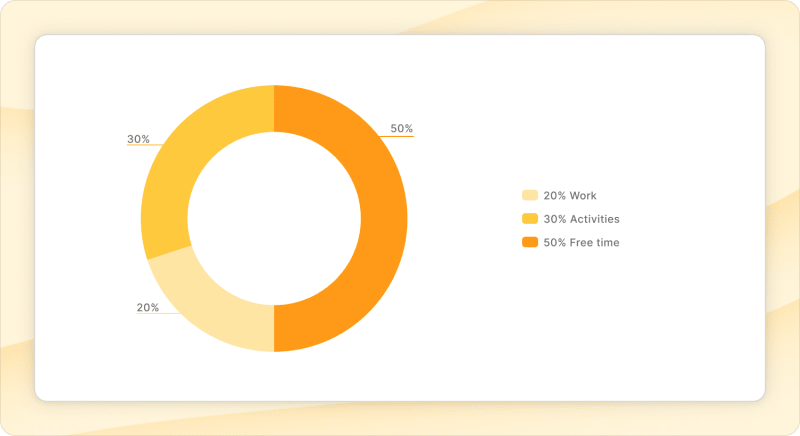
At Todoist, there are mini in-person retreats for individual teams and Todoist Connect retreats for all employees to meet together at once. Chase Warrington, Head of Operations, follows the 20/30/50 rule to organize and host these meetups. He explains in detail in this blog post:
“Our time together consists of:
20% - Dedicated work sessions
30% - Planned social and entertainment activities
50% - Rest, relaxation, free time”
You can also make your social rituals more elaborate, like Chameleon does. The first 30 minutes of their weekly team meeting are dedicated to playing a new game together. The orchestrator of these meetings, Shannon Norton, says she finds them useful for connecting employees to leadership and to other colleagues from adjacent teams.
“It allows employees to create connections with team members outside their direct department (which helps with collaboration). When we do have in-person time together, we are already comfortable with each other and can get the most out of that time. I also find that it makes the founders and leadership more approachable when employees are doing something fun and laughing next to a founder.”
This is consistent with what Ashley Duncan, a participant in these meetings, experiences:
“In these meetings, I get to know people on a personal level, and I think that that has a positive impact on my work because then when I need to collaborate with someone that I don't usually work with – someone outside of my direct team – we have a foundation or a base to start from, and I feel more comfortable in that collaboration with them.”
Where do you find ideas for such games? There are tons of options online: here’s a list of 25 virtual ones. But don’t be afraid to get creative! I hosted one such meeting with my team and collected three random facts about everyone (note: we were a small team) that no one else in the team knew. I mixed those up and asked everyone to guess who the fact was about. The one with the highest right guesses wins. It was a blast, and everyone got to know each other so much better. Shannon also shares a few tips:
“If it's a game/activity where only a few people would talk, I avoid those. I loosely follow a repeatable cadence, so that there is variety in what we are doing, and I track the activities we play in a Notion page. I try to host at least one high-energy competition-style game a month. I do sometimes repeat the style of the game/activity, but typically try to change the theme or topic (take trivia)."
"Anytime I make a trivia game, it's with a different theme. And sometimes it's based on our team members' interests, or I ask them to submit their favorite movie, TV show, food, book, etc, so that it's tailored specifically to our team. I write notes about how the activity went, so I can make modifications. As our team has grown, I've modified games based on participation and energy throughout the meeting.”
At Todoist, there are voluntary monthly casual hangouts. “If you opt in, you get randomly paired with a few other people from all over the company and you spend an hour together chatting about anything and everything,” says Naomi Liddell, Content Lead at Todoist.
Social rituals benefit from being activities outside of work – you get to know your coworkers on a human level, instead of viewing them just as your fellow team members. But that doesn’t mean a few social rituals can’t involve work. Mitchell Cookson and his team at AI tools do monthly “perspective swaps” where two team members switch roles for half a day to see the world through the other’s perspective.
“For instance, our designer might run the first review round on a content draft while the content writer spends that morning working inside Figma on a small UI tweak. The power of this ritual is twofold. First, it builds empathy. You start to understand the hidden pressures and micro-decisions your teammate navigates daily. Second, it naturally sparks process improvements.” explains Mitchell.
“After one swap, our marketing coordinator suggested a new feedback template because she’d experienced firsthand how unclear briefs slow down the design side. These insights rarely surface in regular meetings because people don’t “feel” the pain points until they’re in them. Over time, this strategy has helped us cut down cross-department misunderstandings, improved timelines, and made collaboration far smoother. It’s also surprisingly fun.”
Think of social rituals as a way to encourage a deeper connection between team members – whether that’s by letting them know the human outside of work or by inviting them to understand a team member’s work on a more intense level.
2. Celebratory rituals
Celebratory rituals are to help team members celebrate each other’s efforts and work. The goal is to put a spotlight on everyone (but not all at once) so employees know they’re appreciated and valued.
Cassie Downing and her team at 3 Men Movers practice compliment circles every Thursday.
“There is one rule: the compliment should be vague. A 'you are great' or 'you are hardworking is not allowed. You need to reference something specific they did. A decision, a moment of leadership, input, something. It gives the team morale because they feel seen for the work they do, including what doesn’t show up in performance reviews. Sometimes it is easy to assume no one notices how hard you are working when you feel stretched thin or burnt out. This ritual resets this assumption.”
Tools like Donut also help you give your team shoutouts, which convert to “points” that can be redeemed as custom rewards like company swag, extra PTO day, gift cards, etc. No better way to let your team member know you’re thankful they had your back.
Naomi shares a great example of a celebratory ritual, too:
“At our recent retreat, every Todoister turned up in their room to a card, created by one team member who polled the whole company on things we all like about each other. Then got them printed onto a card and left them in our rooms on arrival.”
Celebratory rituals are also essential during scheduled performance reviews, 1:1 leadership calls, and end-of-project status updates. The goal is to acknowledge and appreciate the hard work of a teammate. Bake them in wherever possible.
3. Performance rituals
These are the rituals that are directly tied to your team’s tasks. Think your daily stand-ups, project review meetings, and monthly all-hands. They take place at a fixed frequency and follow a repeatable format. It’s easy to tune them out and make it the ‘necessary evil’ in your colleagues’ calendars.
To make them a team ritual, add a fun or relaxing element to them depending on the meeting. Daniel Yeromka and his team at HostZealot strike a power pose before starting any team meetings or presentations. Think Batman, Wonder Woman, Spiderman, that sort of thing. It sounds silly, I know. But it helps the team loosen up, especially when the work pressure is dialed up.
“Striking a superhero pose felt silly when we started. What I like the most is how it flattens the hierarchy. When I do it with my team, everyone is a bit more relaxed and the feedback becomes more honest and easier to get.”
And for Ollie Duff and his team at Koalify, it’s a simple 90-second meditation before the weekly team call. “It makes us more productive. Not in the 5% increase in output kind of way. We are productive because we get into the meeting in a calm and settled way. We are less reactive, deal with fewer restarts and repetition,” says Ollie.
The bottom line: Performance rituals are likely already in your repository, but you can make them more meaningful by adding a layer of another short activity.
By now, you’ve got plenty of ideas for rituals your team can try. But when they’re forced or poorly executed, rituals can leave a bitter aftertaste (looking at you, mandatory holiday party). The next section will show you how to avoid that.
4 Pro tips for team rituals (without making them a chore)
Plenty of us have love/hate relationships with dated workplace rituals, like the employee of the month plaques. And fairly so. Here are a few tips to avoid making your team rituals out of touch and boring.
1. Don’t force participation
There’s nothing more dreadful than forced enthusiasm. Don’t ask your team members to participate in every new ritual – it can build resentment and disrupt morale. If someone says they can’t join a virtual watercooler call? Don’t force them to join. Encourage them, invite them, be open to hearing their concerns, but don’t make participation mandatory.
2. Ask for feedback
Sometimes, you won’t know a team ritual you thought was excellent is actually something your employees see as a waste of time. You won’t know because you didn’t care to ask. After testing new team rituals specifically, ask for anonymous feedback so employees can freely share what they think of an activity. And even with the time-tested rituals, seek regular feedback so you can adapt them to your team’s current needs.
3. Encourage employees to host team rituals
Let different team members suggest, adapt, and host team rituals. This will help your team feel they have a strong influence in how these activities are conducted, and it will also give your rituals a fresh and creative spin. Think of activities like virtual games where each team member can rotate ownership every week.
4. Form a social crew
Employees know what they want better than anyone else. Ask team members from various departments to volunteer and create a “Social Crew” responsible for injecting more fun and meaningful team rituals in the workplace. Since these are the people working within multiple teams day in and day out, they have the best ideas about what their coworkers need and crave.
Team rituals are often an overlooked part of a company’s cultural playbook – but it’s the small, frequently done things that make a big impact on your team’s productivity, happiness, and job satisfaction.
Done well, they create moments of connection, spark joy, and remind people that they’re part of something bigger than their to-do list. The best rituals don’t just happen once – they grow into traditions your team looks forward to.
Start simple. Design a few rituals with intention and let your team make them their own.

Rochi Zalani
Rochi is a writer covering productivity, SaaS, and the freelance lifestyle.
