How to build human connections in an async workplace
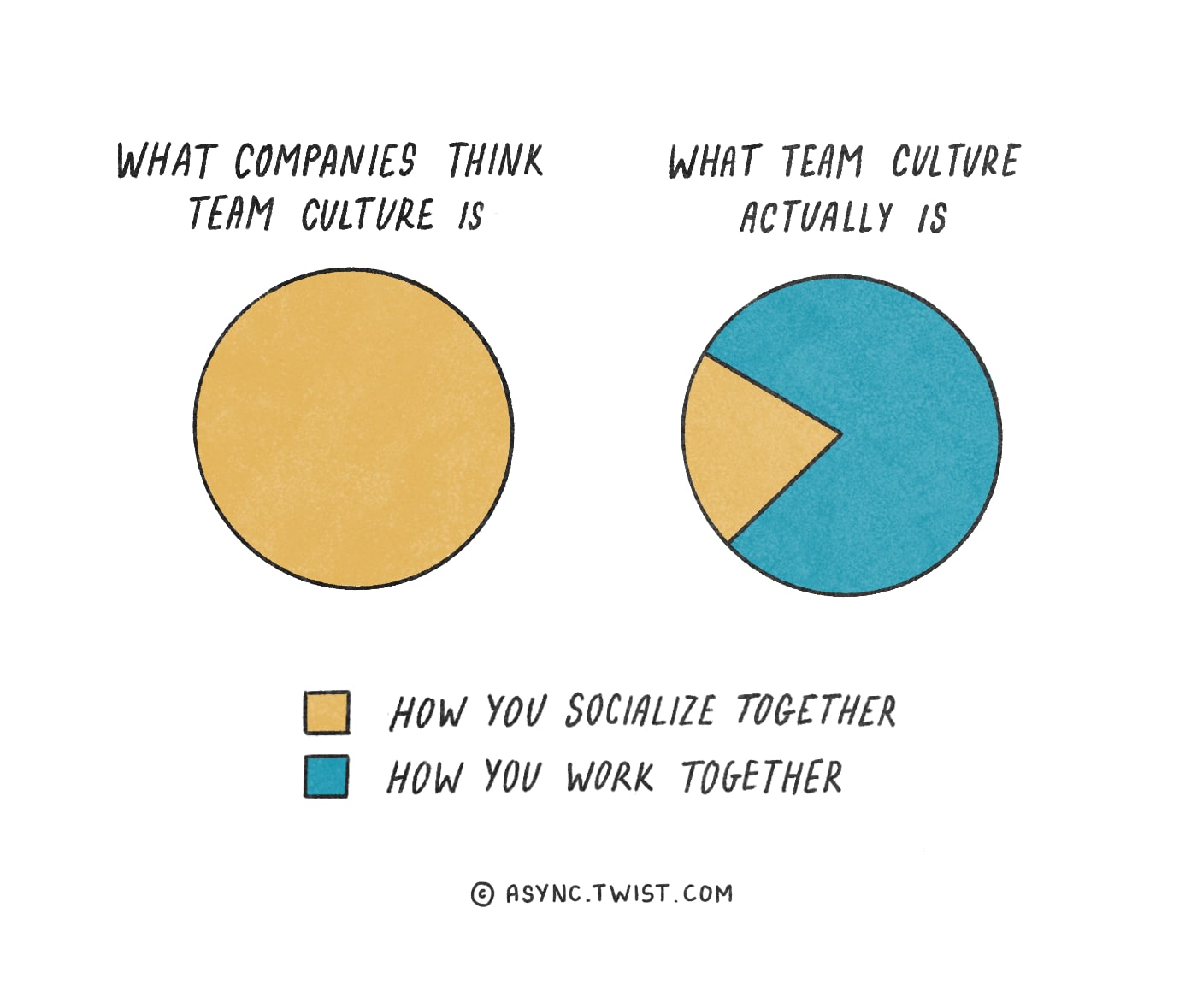
Team culture is primarily built by how you work together, not how you socialize together.
One of the biggest challenges of remote work is a lack of human connection. Todoist is about as async-first as it gets, yet I’ve literally cried when coworkers have decided to leave. It is 100% possible to build a strong team culture that respects people's time and attention and fosters deep personal connections.
As Head of Remote, I want to share my unique perspective on why leaders often focus on the wrong things when building team culture. I’ll lay out Todoist's approach to creating human connection as an async-first team.
The inspiration for this post came from a recent Running Remote event, the world’s largest virtual conference for advancing the future of work. There, I participated in an ask me anything session centered around async communication.
I expected a handful of people to attend and ask questions about which tools to use to facilitate remote work or the best practices we implement at Todoist to keep 100 people across all time zones rowing in the same direction.
I was wrong.
It turned out to be the highest attended event at the conference. I was peppered with questions that centered on one theme: maintaining the human element in a remote async environment.
The conversation around remote work is quickly shifting from making it work right now to optimizing remote work for the long term. Team leaders are no longer satisfied with the immediate productivity benefits of remote work. They’re now shifting to building relationships with colleagues at a distance, promoting team camaraderie, and cultivating organizational culture. These are vital elements of any team that exist outside the confines of KPIs and OKRs.
It’s a refreshing change.
Humans are social beings by nature, and we crave interaction with our peers. Many will say this is the trade-off you inevitably have to make when you transition to remote work. But my experience tells me that just isn’t true.
Focus on these things first
When people ask about building a cohesive team culture, creating camaraderie, and fostering human connections remotely, what they usually mean is recreating the social interactions you get in an office.
We tend to equate a strong team culture with a team that builds personal bonds outside of their work. Don’t get me wrong. Connecting with teammates on a personal level can be an important component of culture. But over my years at Todoist, I’ve come to realize that team culture and human connection is primarily built by how you work together, not how you socialize together.
That’s true for co-located teams too. But it becomes even more apparent when companies can no longer use a pool table and a well-stocked fridge as a stand-in for team culture.
When your team’s culture relies heavily on face time and social interactions, it can easily create an environment that favors those who are able and want to attend team-building activities at the expense of those who prefer to stay heads down in their work. There’s nothing worse than an optional happy hour with professional repercussions if you don’t attend, intentional or not.
Fostering greater social connections won’t create a stronger team culture unless you’re first operating on clear and consistent values in your work. Start there. Don’t let a focus on creating social connections distract you from all of the other things that create a strong cultural foundation.
Todoist had a strong company culture long before we started doing virtual casual hangouts or even in-person retreats. Here are just a few of the ways we build team culture that are far more important than how we socialize together:
Deciding who to hire and who to promote (and, when necessary, who to fire)
Praising each other’s work publicly
Normalizing disagreeing with each other publicly and respectfully
Building products that align with our values
Choosing which projects to prioritize and which to say no to
Giving team members autonomy over their work
Trusting team members to set their own schedules
Respecting people’s off hours, including totally disconnected vacations
Deciding which benefits to offer and how to fairly calculate salaries
3 principles for fostering the social side of team culture
Before diving into how we create space for personal connections at Todoist, it’s worth mentioning three guidelines we keep in mind to make sure that social activities are helpful and not just getting in the way.
1. Make attendance truly optional
Some people want more socializing, some don’t. We don’t pressure Todoisters to participate in a work meeting if it’s not convenient for them, so we certainly won’t force them to join a game or even a company retreat.
By making it completely optional to participate with no guilt, strings, or professional repercussions attached if you opt out, you’ll serve those that truly crave this interaction. You’ll also create a better outcome for all involved.
2. Treat social activities as part of the workday, not an extracurricular
We’re all ambitious with plenty of work to do. If forced to choose between core work or a social activity, it’s likely many of us will choose to focus on our obligations. Or worse, we’ll feel obligated to extend our workdays to do both.
Fostering human connections should be seen as vital to the long-term success of the company. Leadership should encourage direct reports to work these activities into their schedules, not add them to an already full workload.
3. Remember what truly unites us: our work
The work we do is what brings us together. That’s OK (and frankly healthy) to admit. One of the biggest benefits of remote work is that it provides you the opportunity to spend more on the people and things you care about outside of work.
Let’s not sabotage that with a bunch of forced and awkward social events for teammates to attend in addition to their work duties. The quantity of activities isn’t the objective here. We’re aiming for a handful of quality options to help foster a healthy balance of focusing on meaningful work and building connections with teammates across the globe.
Guided by those three principles, we have three buckets of social team-building activities at Todoist: in-person meetups, real-time virtual activities, and async virtual socializing.
In-person meetups
Though we’re a remote-first company, we make an effort to meet up regularly in real life (IRL). Our first annual company-wide retreat took place in Menorca in 2015, and our team meetups have expanded in scope over time. They’re well worth the money spent.
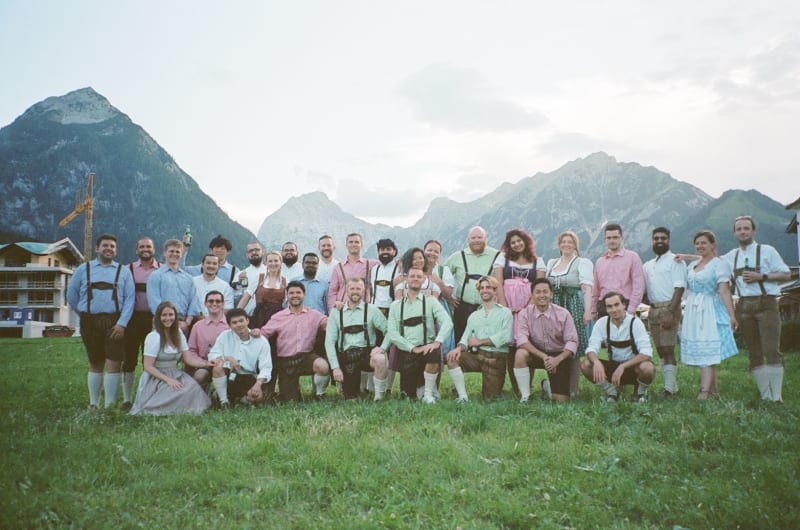
2022's retreat in Pertisau, Austria
At Todoist, we have four ways to encourage IRL meetups.
Company-wide retreats
Once per year, we bring the whole company together in one location for a week. For example, in 2022 we were in Pertisau, Austria, and in 2023, we met again in Italy.
Team miniretreats
Three years ago we started incorporating what we call mini-retreats into the calendar. Each team has the budget to get together in person once each year. Usually we hold these about six months after the company-wide retreat, so people can look forward to seeing other Todoisters every six months.
Mentorship trips
Joining a remote company can be intimidating. The prospect of not meeting any of your teammates for several months can be a bit depressing (ask anyone who joined Todoist at the start of 2020). We recognized that one of the keys to employee retention was helping new hires establish relationships early on in their careers with Todoist.
So we incorporated mentorship trips into the onboarding process. Each new hire is assigned a peer mentor on their team. During the first month at Todoist, they spend a week working (and hanging out) together in one of their hometowns.
Meetup stipends
We’re constantly evolving how we encourage connections between Todoisters. Most recently, we introduced a meetup stipend. We’ll reimburse up to $200 per year for travel and entertainment expenses when Todoisters choose to meet up somewhere in the world.
Whether it’s a flight, a dinner, a couple coffees, or a concert ticket, if you want to meet up and hang out with your teammates, we support that! Todoisters often incorporate seeing coworkers into their travel plans.
With all IRL meetups, remember that the time should primarily be used for the aspects of teamwork that aren’t as easy to accomplish in a distributed environment: the human element. It can be tempting to schedule a lot of meetings and brainstorming sessions. But the truth is, these are usually more productive (not to mention inclusive) when done virtually. Leave the work for the other 50 weeks in the year.
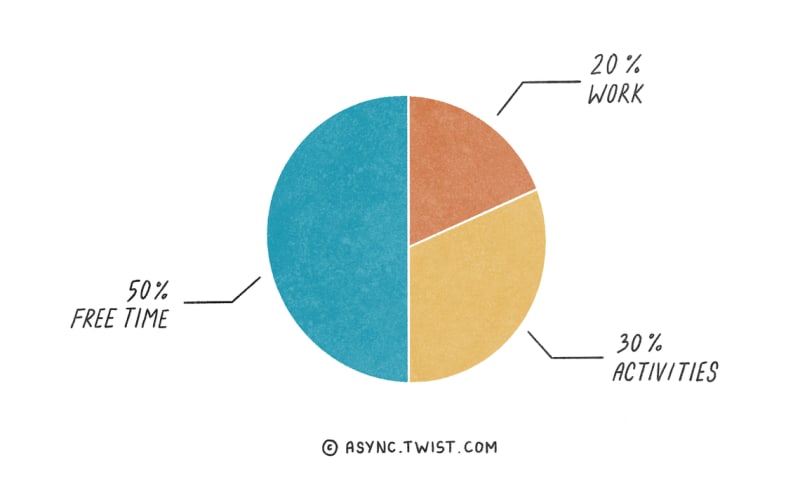
I wrote more about my 20/30/50 rule for remote team retreats earlier this year.
Don’t over-schedule the agenda with activities. Instead, leave plenty of time for organic conversation to take place. And remember to build in time for recharging your batteries.
When you’ve become accustomed to working from home in solitude, suddenly being thrust into ten hours of socializing per day for several days in a row is exhausting. Especially for introverts. Reserve time for people to be alone and recharge as they need to, so they’ll be able to show up for planned activities in a much deeper way.
Virtual, real-time activities
While in-person meetups are great, we can’t afford to do these very often. We’re an async-first company, but that doesn’t mean we’re async-only. Here are a few fun ways we’ve started to connect virtually, in real-time as a team:
Todoist Talks
A series created by my colleague on the back-end team, Modasser, Todoist Talks are monthly gatherings held over Zoom where a teammate showcases a skill, process, or tool that they’re passionate about. Todoisters have presented on a wide range of topics, from how to get more out of tools like Figma to the history of parts of our back-end code.
The meeting lasts for an hour, with a presentation by the volunteer for the month and time for Q&A. We also record these sessions to be viewed later by anyone that wasn’t able to attend, and we try to stagger the times so people around the world have an opportunity to join live. These talks give us a chance to bond over our work outside of our day-to-day jobs.

Todoist Presents
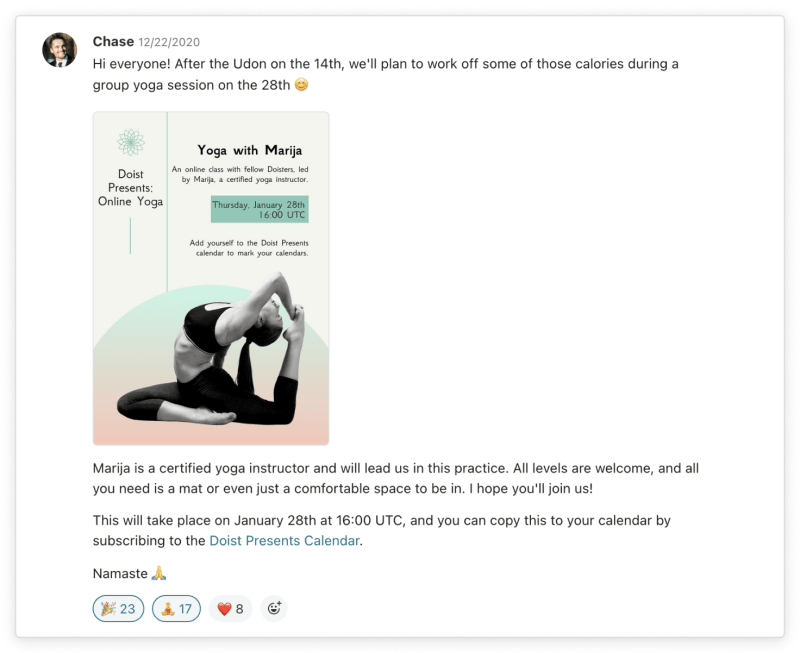
Similar to Todoist Talks but with more focus on what happens outside of work. It’s the Instagram to the Todoist Talks LinkedIn, if you will. Each month a teammate volunteers to host a Zoom or Meet call and lead a group in an activity. We’ve had yoga and fitness sessions and cooked meals together. And we have plans for drawing classes, jam sessions, and more.
Casual hangouts
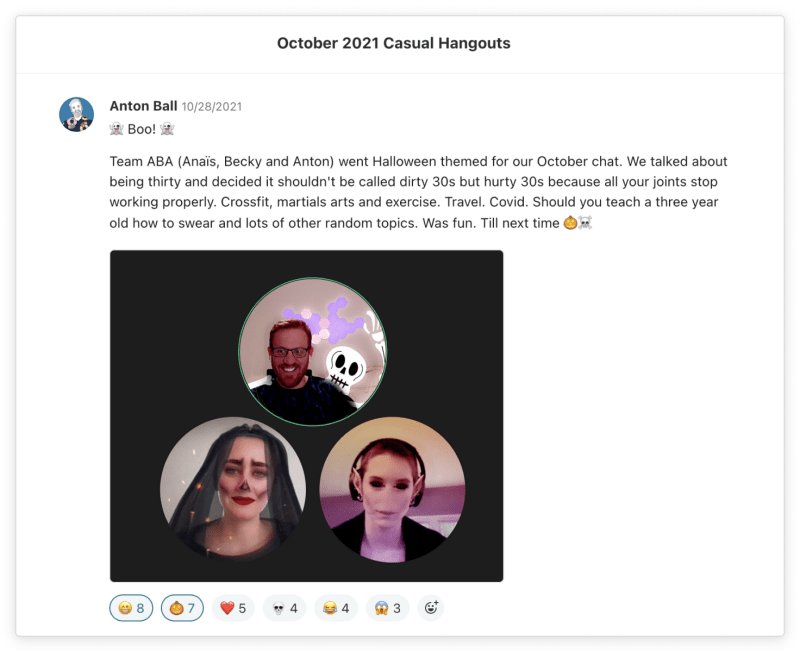
Each month Todoisters can opt into a one-hour casual chat on their meeting platform of choice with two or three other teammates, selected at random. Our People Ops team sends out a form asking if you’d like to participate. If you respond yes, you’re paired with a couple of teammates and assigned a leader within the group to find the best time for everyone during the month. Groups often take a screenshot and share with the team afterward.
Team syncs
We don’t have company-wide all-hands meetings. Coordinating 100 people across all time zones to sit on a Zoom call at odd hours of someone’s night isn’t worth it. But most teams at Todoist have occasional team-wide calls weekly or monthly. These meetings serve more as an excuse to get together than for getting things done. We use this meeting time to connect on a human level, share some laughs, and brainstorm ideas a bit in real-time.
At our monthly marketing meeting, we start each session with a lighthearted question, like What superpower do you wish you had? Or we accompany the discussion with a Figma or Miro board to jot down ideas discussed during the session. Afterward, we usually continue the discussion asynchronously in a dedicated Twist thread.
Hello Todoist
A quarterly series where we bring in third-party experts to lead us in virtual activities that help us work together and connect on a deeper level. From breathwork to brainstorming, we want to give Todoisters access to the best leaders in their respective fields and help our teammates connect and thrive in new ways.
Async socializing
We communicate asynchronously 80% of the time for work, so it feels natural for us to socialize asynchronously too. Some people assume async communication is impersonal, but as is the case with distributed work in general, it just takes a bit of creativity and intention. Here are a handful of ways we socialize asynchronously.
Social channels and threads
We have nearly 20 Twist channels dedicated to non-work interests. These topics range from #Gaming and #Gardening to #Crypto and #Cooking. Providing these spaces for human interaction inside our primary work communication tool makes it easy for Todoisters to connect on a daily basis asynchronously.
Participation is optional, and since Twist is designed to reduce noise and notifications, only those that are truly interested are distracted by these discussions. Additional channels include #Mindfulness, #Parenting, #Health/Fitness, #Coffee, and #BookClub, among others.

Automated check-ins
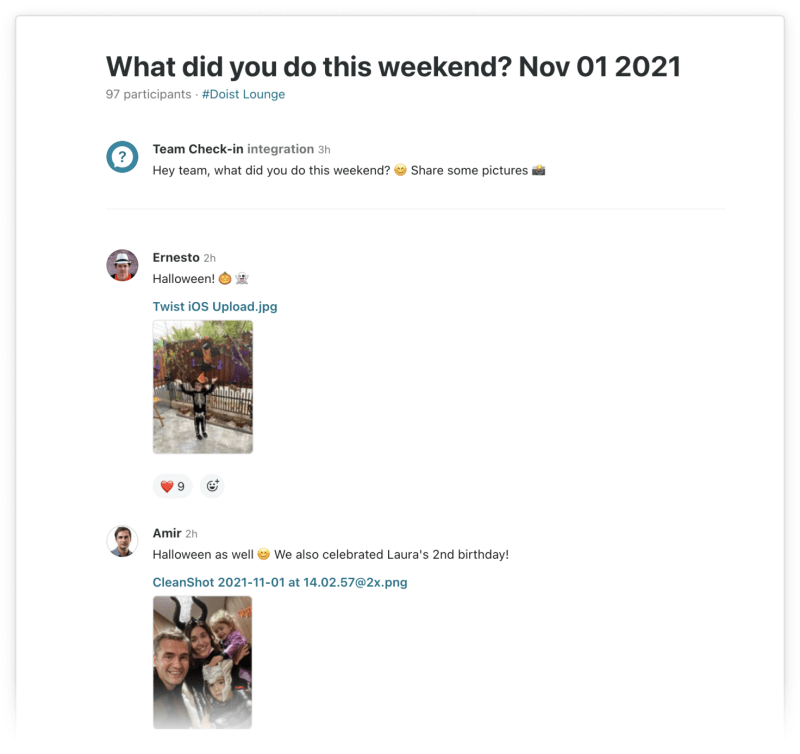
We built a series of fun automated check-ins in Twist to prompt interesting non-work discussions and to share more about our personal lives, hometowns, and home countries. Here are some examples of these automated threads:
What did you do this weekend?
Happy birthday wishes on a teammate's birthday
Work anniversary celebrations
Ask Todoist threads
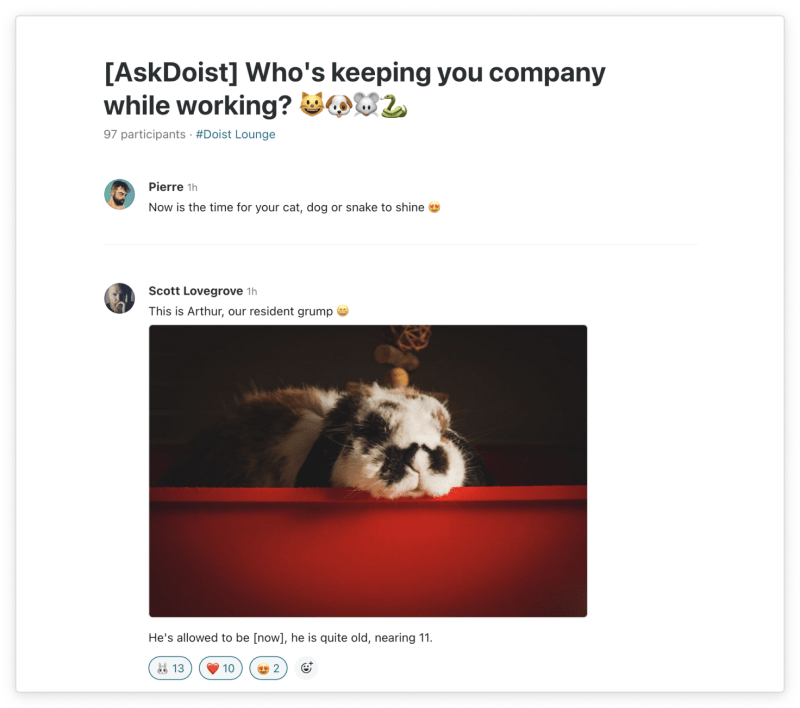
If bots aren’t your thing, one of our teammates has taken it upon himself to create Ask Todoist threads, where he occasionally asks everyone in the company a random, often humorous, and always interesting question. Past threads have ranged from What do you put on your toast? to Do you have a word or phrase to avoid campfire smoke? to Tell us about a person known for their good actions in your country that we should know about.
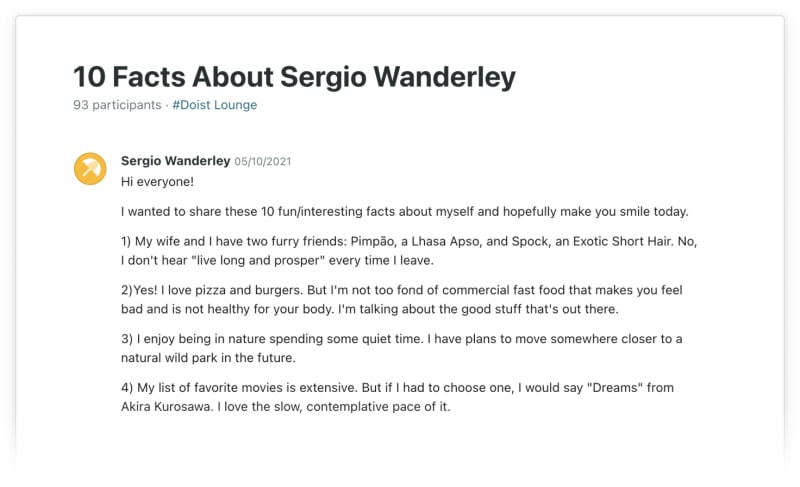
10 interesting facts threads
One of the first tasks assigned to a new hire is to share 10 interesting facts about themselves with the whole company. This small change to our onboarding process has paid huge dividends.
As opposed to sharing their LinkedIn profile or quickly introducing themselves in a real-time meeting, we want to get to know our new teammate on a more personal level. New Todoisters are encouraged to take their time on this and dive deep on any side projects, interests, or beliefs. It’s incredible to see how quickly bonds over mutual interests are formed over such discussions.
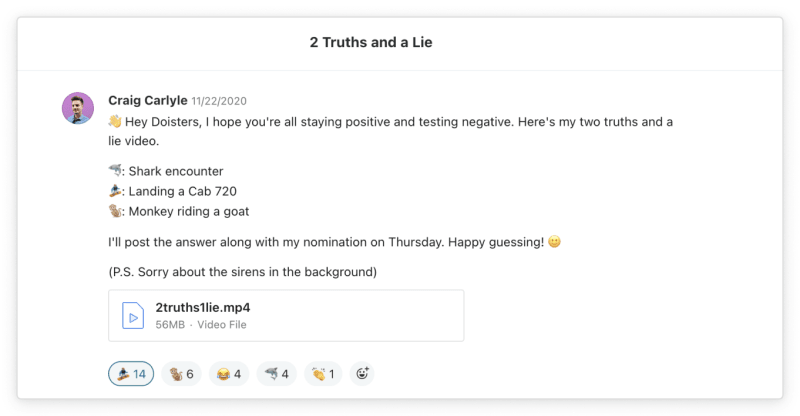
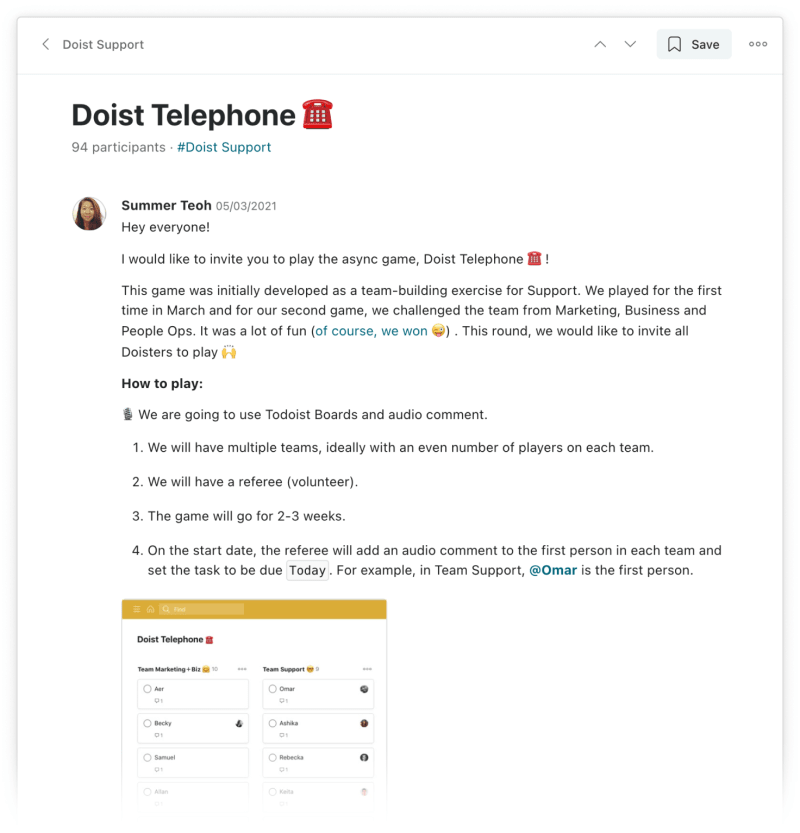
Async games
You’re never too old for some game time, right? We recently started playing a few async games like Two Truths and a Lie in a dedicated Twist thread with votes via reaction and even async Telephone via Todoist tasks and voice comments.
Space to chitchat separate from work
Twist is a thread-first tool, but every team needs an informal place for chitchat. That’s why we designed the app to separate out threads for more in-depth work discussions from messages for more informal back-and-forths.
At Todoist, we have a company-wide group message where we drop GIFs, share interesting tidbits, and discuss current events. All teammates are added, but anyone can opt out, mute, or disregard entirely at any time.
Nothing of work importance is discussed here, so people can choose when they want to hang out at the company watercooler and when they want to focus on their work. Many teams within the company have created similar group chats for smaller team chitchat too.

A screenshot of the Todoist Generalist, with founder Amir sharing an article about UFO sightings and national security.
What’s next?
At Todoist, we’re constantly experimenting with ways to foster human connection in an async-first workplace. But as our ability to virtually recreate the office increases, we need to be careful not to revert back to old ways of doing things. We need to avoid rewarding face time and presenteeism over real productivity or favoring those who are able and willing to show up for non-work activities over those who aren’t.
Let’s continue to find new, innovative ways to capture the positive aspects we miss from the office without losing sight of the things that make async work work better for humans in the first place.

Chase Warrington
Chase Warrington is the Head of Operations at Todoist. He hosts About Abroad, a podcast about the future of work, and writes and speaks on remote leadership, company culture, and modern workplace topics. His work has been featured in Forbes, Harvard Business Review, and the World Economic Forum.
