
Todoist es el administrador de tareas nº 1 del mundo para organizar tu trabajo y tu vida. Quiero saber más
With so many tasks on your to-do list, it’s easy for all of them to feel important. You might find yourself spending some days knocking tasks off your agenda, yet feeling like you got nothing done at the end of it all. I’ve definitely been there myself, and it feels like a game of whack-a-mole.
But let’s pause for a second and consider: What if 80% of those tasks didn’t actually matter?
The Pareto principle asks us to identify the tasks on our roster that get results so we can focus on work that makes an impact. If you find yourself overwhelmed by your to-do list, it can be a useful tool for prioritizing what matters.
Let me explain what the Pareto principle is and how you can use it for easier task prioritization in your daily workflow.
What is the Pareto principle?
Also known as the 80/20 rule, the Pareto principle states that a small number causes (around 20%) leads to most of the results (about 80%).
Dr Joseph M. Juran, an expert in quality management, created this principle based on economist Vilfredo Pareto’s observation that 80% of Italy’s land belonged to 20% of people. He extrapolated that concept into something we can apply to quality issues or any other aspect of business.
It’s still helpful today for both personal workflows and business operations. Since it gives you a guide for judging the impact of your tasks, it helps you manage your time more effectively. Plus, it can help you get more impact out of your work by showing how you can maximize results through your most important tasks.
Why it matters at work
The Pareto principle often comes up as a technique to promote efficiency, but it also matters at work because it can give you more clarity, peace, and boundaries.
It reminds us that not all tasks are created equal. 20% of products can generate 80% of your business’s value, for example. But at the same time, 20% of software bugs can cause 80% of crashes. This simple, yet powerful filter can help you fight daily overwhelm in two ways:
You can get the clarity you need to prioritize your tasks appropriately. We all have a lot of work to tackle during the day, so much so that it can be hard to even end work on time. The Pareto principle highlights what tasks to focus on so you can finish your to-do list on time and with less stress.
You can make fewer perfectionist goals to get everything done. When you don’t know what impact your tasks have, you can get caught up in completing everything on your list. The Pareto principle illuminates the tasks that matter so you know what “good enough” looks like.
How to spot the 20% that matters in your workflow
One of the trickiest parts of using the Pareto principle is finding the 20% of tasks on your to-do list that truly matter. While it sounds straightforward on paper, not everything translates into metrics immediately. Follow these tips to identify your 20%:
Focus on outcomes over effort. For example, if you work in manufacturing, you might look at units sold over units produced. Look for tasks that earn money, grow your customer base, or otherwise progress your business.
Review your past work for patterns. In subject areas with clearer metrics, such as digital marketing, you could examine conversions and the data attributed to them. But don’t skip results that take more investigation to find, such as positive comments on a blog post.
Ask your colleagues for help. If you aren’t in a senior enough position to monitor results, ask one of your mentors which results you have the most impact on. Conversely, you can be part of the change in a senior position by talking to your reports about their effect on the business.
Check customer feedback. Depending on the nature of your work, customer feedback or service tickets could also shed some light on what tasks make a true impact. For example, even though they operate outside of customer service, a developer could understand the impact of certain features through positive customer comments.
Examples of the Pareto Principle in action across roles
To help you understand how to apply the Pareto principle to your role, I talked to real working professionals across industries to understand how they found their 20%.
Supplier management
Šarūnas Bružas, the CEO of the ecommerce business Desktronic, considers the impact of a supplier contract when deciding how much of its work to automate. While he puts more manual work into supplier relationships that garner the majority of his profit, he automates more tasks for suppliers that don’t have as much of an impact.
Product development
According to CEO Geoff Knight, the File Tax Online team uses the Pareto principle to identify the 20% of new product features and forms that would drive 80% of positive results for users. They receive many requests for new product developments from customers, and the 80/20 rule helps them identify which ones to launch first.
People management
After he found his interns asking many of the same questions, Peter Lewis at Strategic Pete refined his onboarding process using the Pareto principle. He discovered that 80% of those questions connected to 20% of issues, and he built a training that targeted those issues specifically.
How to apply the Pareto principle to your workflow
After you discover the 20% of your work that drives the most impact, you can start designing your workflow around it. Let’s break it down into daily, weekly, and quarterly levels:
Daily: Plan your day around one top priority task that drives the most impact. This strategy dovetails nicely with productivity methods surrounding a single daily task, such as eat the frog or the Hemingway bridge.
Weekly: Start by organizing your tasks into categories and identifying the most impactful category. Then, design your weekly schedule to have about 20% of your tasks fall into that category. For example, TMetric CMO Margo Lee-Kashuba dedicates 20% of her weekly calendar to strategic work.
Quarterly: With quarterly goals, you can get a little broader – set them based on outcomes over activity. The 20% you identified using earlier advice from this guide will help you lock in these goals.
Todoist can help you tag, filter, and review high-impact tasks to organize your days, weeks, and quarters around the 80/20 rule. Try these approaches:
Set priority levels based on your 20%. Give your 20% tasks the P1/Priority 1 flag to give them a prominent highlight and show them near the top of the list in your Today and Upcoming views.
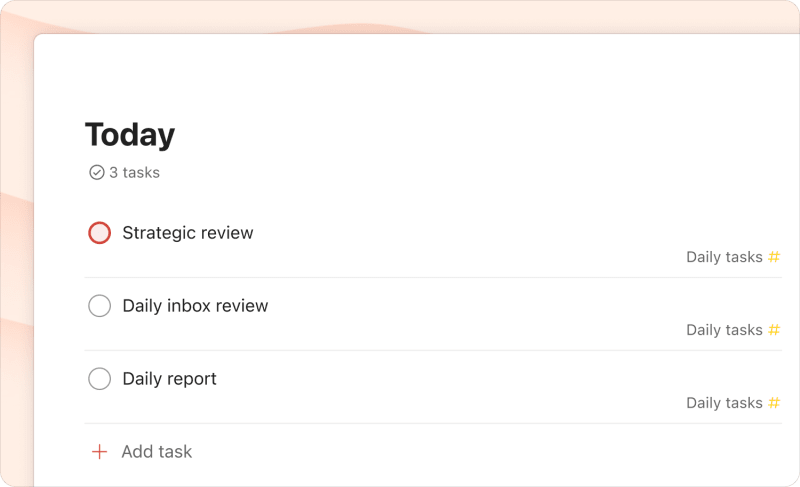
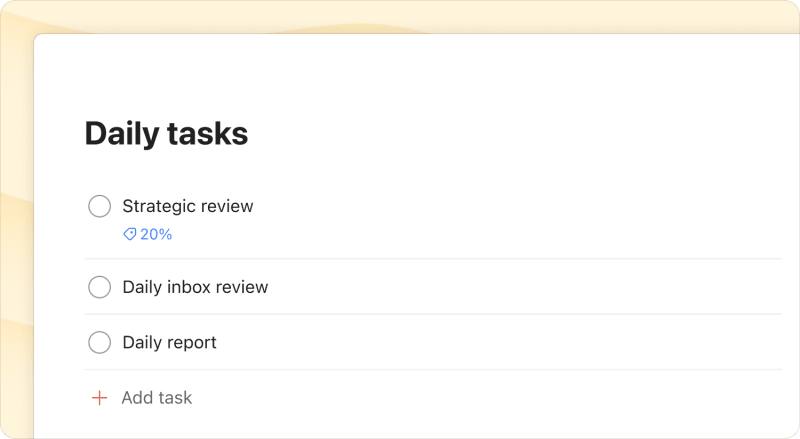
Combine labels and filters to see only the tasks that matter. Give your 20% tasks a special label, then create a filter to quickly switch to an 80/20 view.
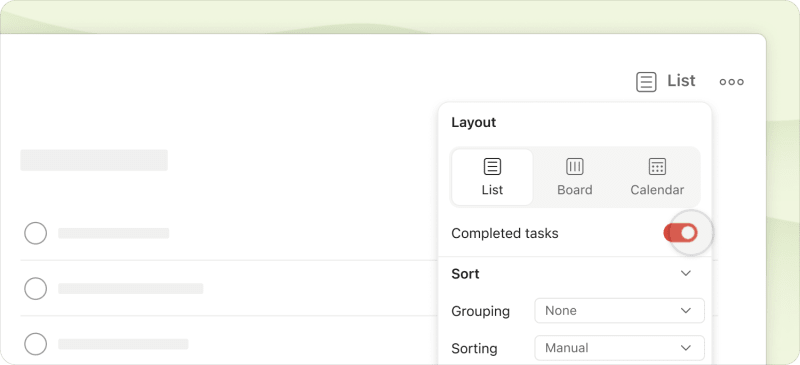
Check your completed tasks to understand what actually gets done. As you review your work’s impact, you can see what actually got done over the past week or month by visiting your Todoist project’s completed tasks.
You can mix and match the above strategies as they make sense to your workflow. Just make sure to perform weekly or monthly reviews on the actual impact your work makes to inform your prioritization. And you can turn all of these tips into regular habits by integrating your 80/20 reviews into your personal or team reviews.
Mistakes to avoid as you prioritize
The 80/20 rule is so direct that we can trip ourselves up on the simplicity. Keep these mistakes in mind as you identify and execute your 20% tasks so you can get more out of your prioritization.
Taking 80/20 too literally
While the Pareto principle uses 80% and 20% as its numbers, you don’t have to take them literally. You might have 15% of your work that contributes to 65% of your impact, for instance, and it would still fall in the 20% under the 80/20 rule. It’s a rule of thumb for you to find the tasks that make the most impact and put them first.
Optimizing for output over outcomes
Design your 80/20 workflow around the impact each task makes rather than how much work it gets done. Even if a priority looks correct due to sheer volume, another priority might make more sense because of how much it moves the needle.
For example, Geoff from File Tax Online made this mistake when building features based on customer feedback. “We focused on the problems that impacted the most users by headcount. I was not aware that certain small groups of our users are our most profitable customers,” Geoff says. The File Tax Online team now takes customer relationships into account during this feedback process.
Ignoring team alignment
If you and your teammates all have different definitions of your 20%, you probably won’t be driving the 20% that matters for your organization as a whole. Keep the conversation open with your team on what tasks drive the most impact and how you can all prioritize them effectively.
Not considering compounding impact
Foundational work can be just as important as work that has a more immediate impact. Margo from TMetric used to aggressively cut tasks like competitor research and process improvements from her Pareto-focused schedule, but then she realized they built future leverage. Now, she guards these tasks’ importance carefully.
Keeping your 80/20 priorities constant
The most important 20% of work for you or your business constantly changes, so your priorities should, too. A few of the professionals I talked to mentioned that they did not adjust their 80/20 priorities to reflect actual importance often enough and found them falling out of alignment. Perform regular reviews on the impact of your work and change your 20% accordingly.
It’s about quality, not quantity
The next time you’re feeling overwhelmed at work, remember: Most of what matters comes from a small fraction of what you do, not endless output. Even if you see a huge number of tasks on your list, you only need to complete a fraction of them to make meaningful progress towards your desired results.
Take a deep breath, look at your past outcomes, and prioritize. What task could you tackle today that will have the most impact?

Melissa King
Melissa King is a freelance content marketer for B2B SaaS companies in marketing, automation, and other industries that help people do their best work.